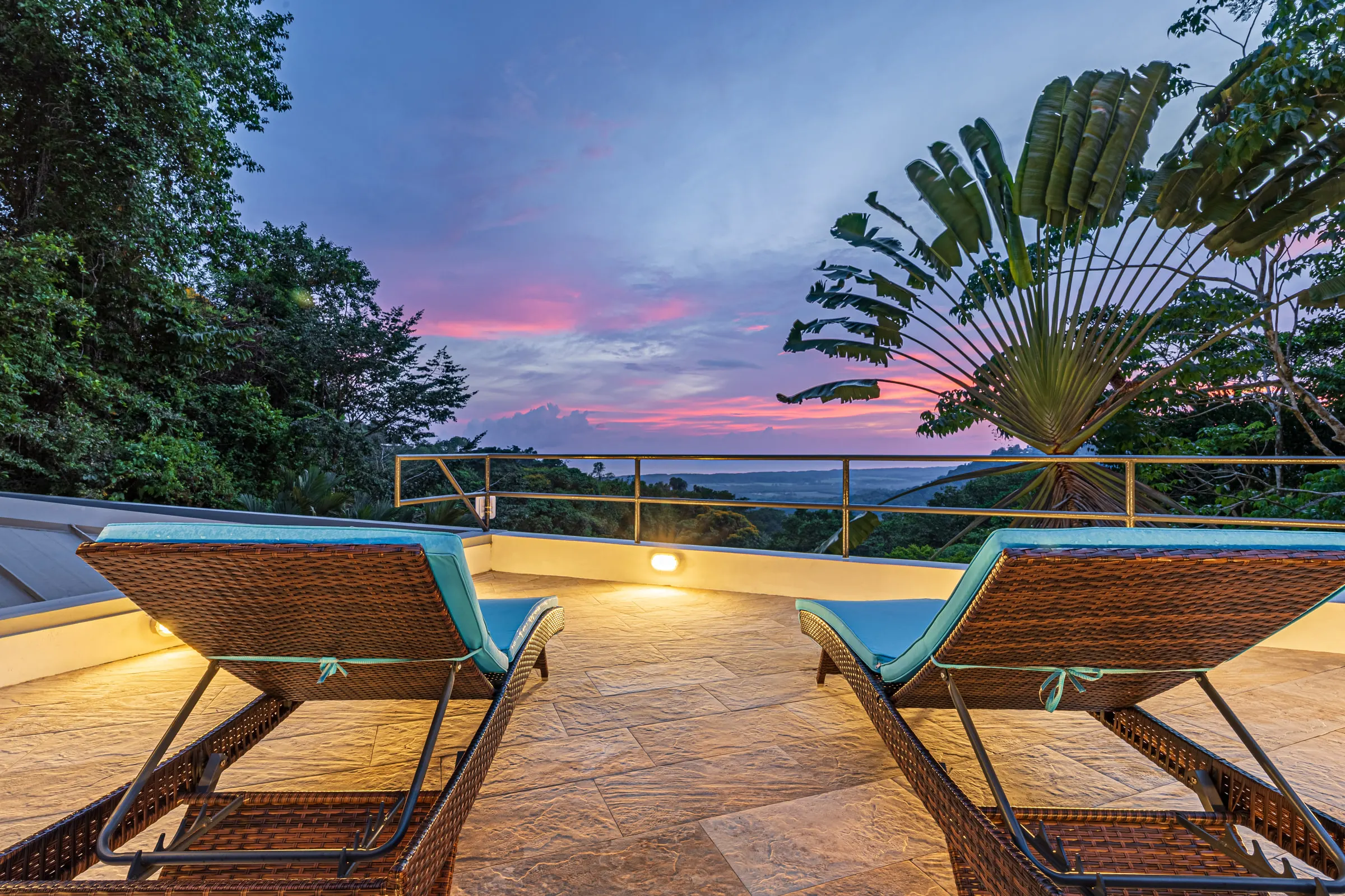
Playa Linda and Playa Matapalo: the coast's emptiest beaches
Two long, wild beaches sit between Manuel Antonio and Dominical, and most travelers drive past both. A local guide to the quiet stretch we call home.
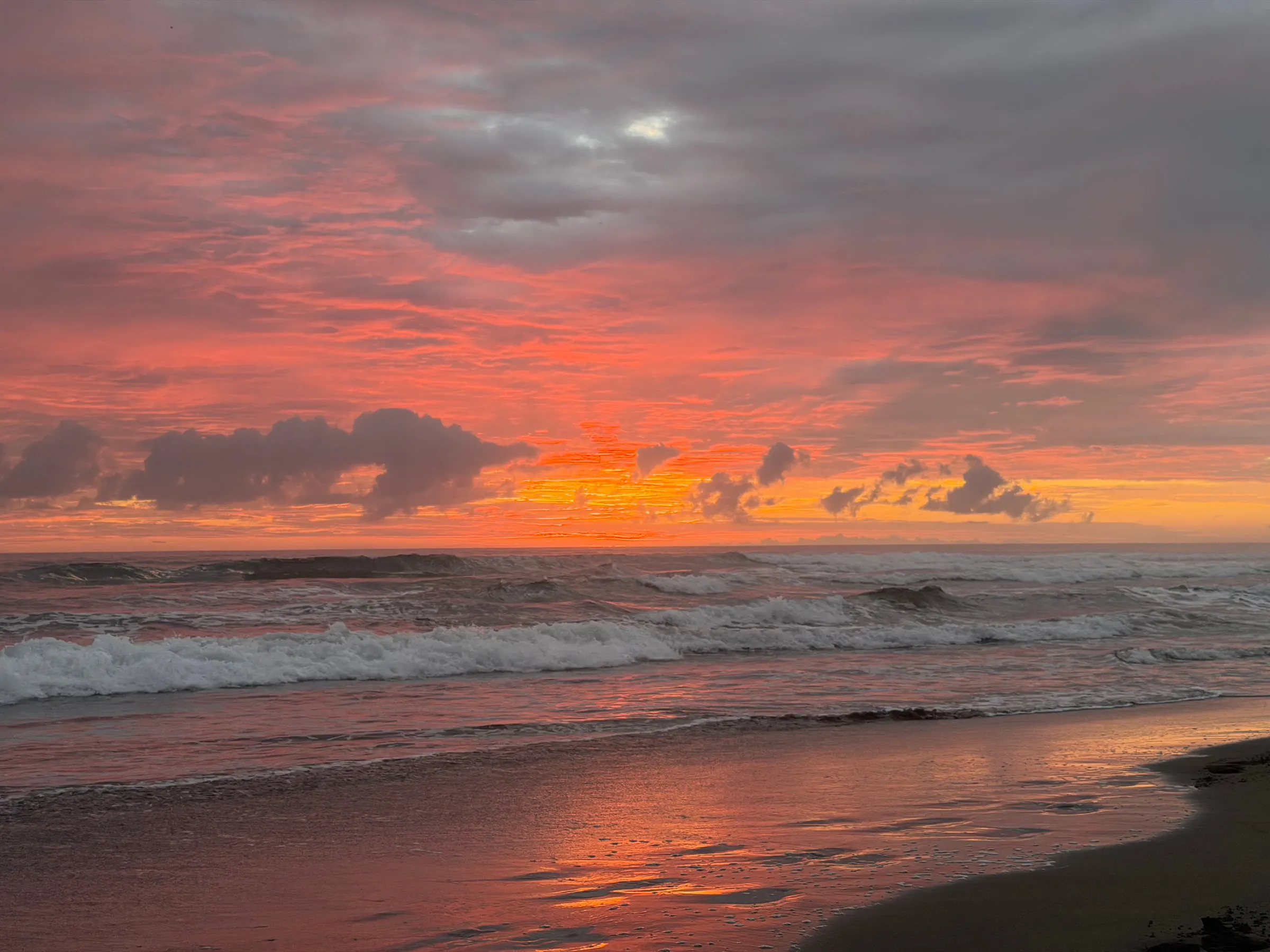
Ask a hundred travelers on this coast to name a beach and you will hear Manuel Antonio and Uvita a hundred times. Almost nobody names the long, palm-backed stretch in between, which is exactly why we are writing about it. Playa Linda and Playa Matapalo are the home beaches of Casa Frondosa: kilometers of dark gold sand, warm Pacific water, and on an ordinary day, more herons than people.
Playa Linda, the one we would keep secret
Playa Linda runs long and open, framed by palms with the green wall of the coastal mountains rising behind. The name means beautiful beach, which is not creative, but stand on it at sunset and you will forgive whoever chose it. There are no beach clubs, no chair rentals, no vendors. What you bring is what you have, and the house keeps body boards and beach chairs ready for exactly this reason.
Guides that do mention Playa Linda tend to call it a local secret, and the label holds. You will share it with fishermen working the shore break, families from the village on weekends, and wading birds patrolling the tideline. Horses graze loose near the river mouth end. It is the kind of beach Costa Rica’s famous coasts had before they became famous.
Playa Matapalo, the village beach
A little south, Playa Matapalo fronts the village of Matapalo, the closest thing this stretch has to a town. The beach is another long, wild ribbon of sand, and the village behind it holds a few sodas, a surf spot that locals rate highly and travelers rarely find, and enough shops to cover what you forgot at the big supermarkets.
Matapalo’s quieter claim is its sea turtles. A community conservation project has worked this beach for decades, patrolling the nesting season, which runs roughly June into December. Stay in that window and an early walk might cross fresh tracks from the night before. Give nests their space, keep flashlights off the sand after dark, and you are watching one of the oldest rituals on the Pacific from your own doorstep.
Making these beaches your default
The math of a beach day changes when the empty beach is the near one. From Casa Frondosa, Playa Linda is the closest sand to the house, so a swim before breakfast or a sunset boogie board session is a whim rather than an expedition. The famous stretches are still there when you want them: Manuel Antonio, Dominical and Uvita each have their day, and the park is worth booking properly. But most guests find the rhythm flips within a day or two. Crowded beaches become the excursion. The empty one becomes home.
See the coast in the gallery, or check what else is within reach of the house when you are sketching out the trip.
Good questions
Where is Playa Linda?
On the Central Pacific coast between Manuel Antonio and Dominical, just north of Playa Matapalo and the village of Matapalo. It is the nearest beach to Casa Frondosa, reached from the coastal highway by a short local road.
Is Playa Linda good for swimming?
Treat it like any wild Pacific beach: beautiful, powerful and unguarded. On calm days the shallows are lovely, and body boarding the whitewater is great fun. Respect the currents, keep kids close, and when the swell is big, enjoy it from the sand.
When do turtles nest at Matapalo?
Sea turtles nest here roughly June through early December, with the busiest months toward the end of that window. A long-running local conservation project patrols the beach in season. Keep lights off the sand at night and give any nest or hatchling a wide berth.
Are there restaurants at these beaches?
Matapalo village has a handful of laid-back sodas and beachfront spots. Playa Linda is quieter still. That is the trade and the charm: bring water and snacks, and plan the proper meal for the village or for your own outdoor kitchen back at the house.
Why are these beaches so empty?
No resort strip, no tour-bus stop, no famous park gate. The towns on either side absorb the crowds, and this stretch never built for them. The people you share the sand with are mostly locals and the guests of a few hillside homes.