Do you need a 4x4 on Costa Rica's Central Pacific coast?
For the highway, no. For the good stuff in the hills, yes, and for Casa Frondosa it is an absolute requirement. How to book the right rental car.
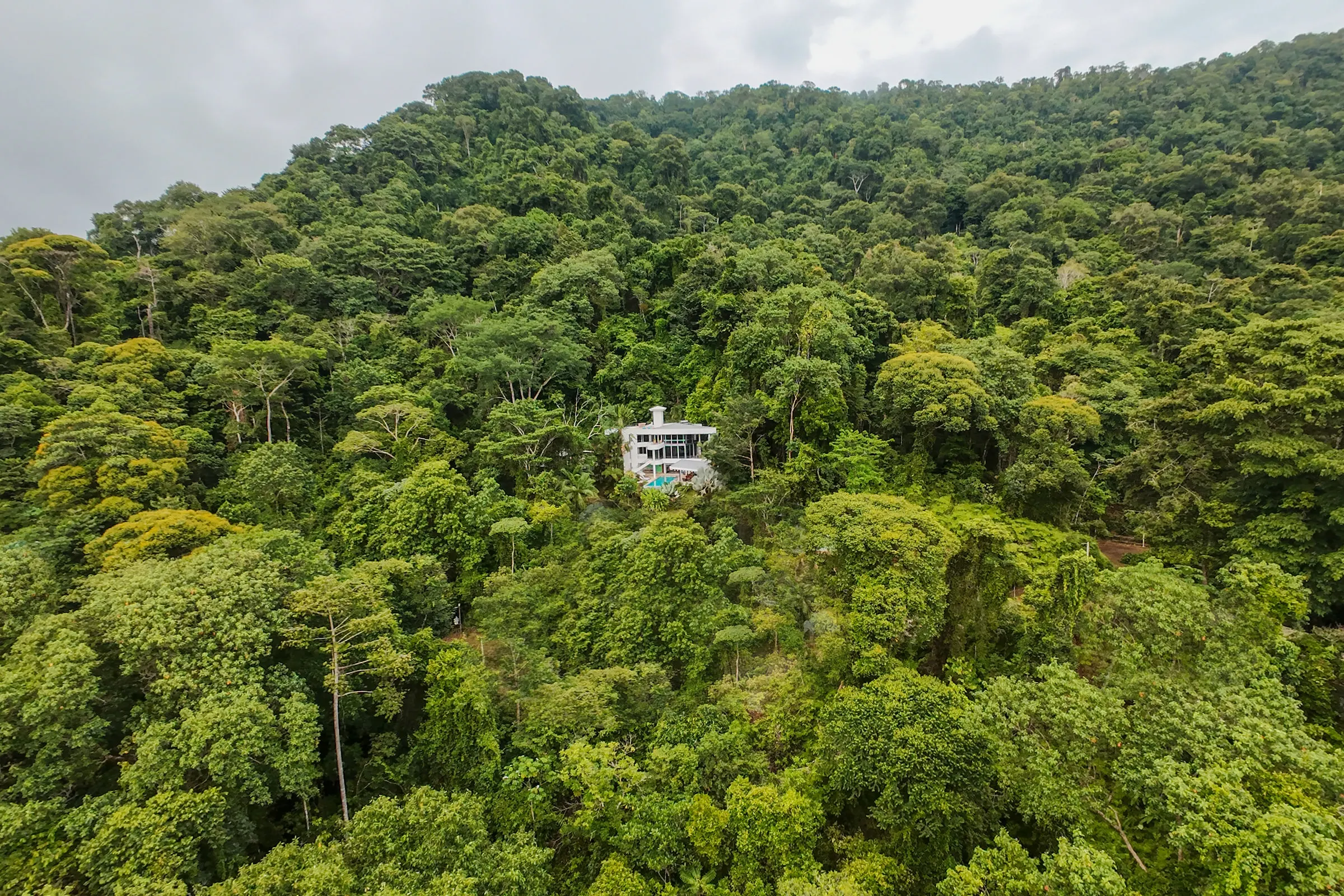
Ask whether you need a 4x4 in Costa Rica and the internet answers with a shrug: depends where you are going. Fair enough. So here is the answer for this exact stretch of coast, from people who drive it daily, ending with the one non-negotiable that applies to staying at Casa Frondosa.
The highway is easy
First, relax about the drive itself. The Costanera, Route 34, runs the whole coast as smooth pavement: Jaco, Quepos, Portalon, Dominical, Uvita. The run down from San Jose is paved highway too. Any rental car covers it comfortably, and the drive south of Quepos, with the mountains stacking up on your left and the Pacific flashing through the palms on your right, is one of the trip’s quiet pleasures. Coming down for a beach day at Playa Linda or the park run to Manuel Antonio? Pavement, all of it.
The hills are the whole point, and the hills are steep
Now the part the generic guides cannot answer for you. The best places to stay on this coast are not on the highway. They are up in the ridges above it, where the views, the breezes and the wildlife live. Every one of those hillside roads is its own animal: steep grades, switchbacks, and surfaces that swap between concrete strips and gravel. This is where the shrugging stops.
Casa Frondosa sits high in the Portasol community, and the climb to the house is a steep mountain road. So here it is, as plainly as we can put it: a 4x4 vehicle is required to reach the house, no exceptions. Not preferred, not recommended in rainy months. Required, all year. A standard car will not make the grade, and a light all-wheel-drive crossover is not the same thing as a 4x4, however confident the badge looks. What you want is the rental category the agencies themselves label 4x4, the mid-size SUVs that make up half the traffic in this country precisely because Costa Rica is built like this.
Booking the right car without drama
Reserve the 4x4 category when you book your flights, not at the counter, especially for the dry high season when the good vehicles go first. If a deal tempts you toward something smaller, or you are unsure whether a specific model truly qualifies, message us before you reserve it and we will tell you straight. Guests who arrive in the right vehicle mention the road once, on day one, usually with a grin, and then never think about it again. The climb is a short run of jungle switchbacks, and what waits at the top of it is the reason you came.
Good questions
Is the road from San Jose to the Central Pacific paved?
Yes. The route down to the coast and the Costanera highway running south through Quepos, Portalon, Dominical and Uvita are fully paved. A standard car handles every kilometer of highway without complaint. The story changes the moment you turn uphill.
Do I need a 4x4 for Casa Frondosa specifically?
Yes, without exception. The final climb through the Portasol community is a steep mountain road that a standard car cannot manage. Book a true 4x4 and the road becomes a non-event you stop noticing by day two.
Is all-wheel drive the same as 4x4?
No, and this is the mistake that strands people. A light all-wheel-drive crossover helps on wet flats but lacks the clearance and low-end gearing for steep grades. Book the category the rental company itself labels 4x4, and ask us if a specific model has you unsure.
Does the wet season change what car I need?
It raises the stakes on the same answer. Green-season afternoons bring real rain, and steep grades that were merely fun when dry become genuinely off-limits to anything without four driven wheels. The 4x4 requirement here holds all year.
Are 4x4 rentals expensive in Costa Rica?
They cost more than a compact, and they are the correct tool for this country. Mid-size 4x4s are the most common rental class here for a reason. Book early in high season, insist on the real category, and decline any downgrade at the counter.